

Introduction
Curious and concerned readers, picture this: your favorite crunchy indulgence – French Fries – is stealthily increasing your risk of type 2 diabetes. Intriguingly, it’s not the humble potato at fault, but how it’s prepared. With mounting global rates of metabolic disorders, this discovery begs our attention.
Today, we’ll delve into recent, robust research to uncover why French Fries are under the nutritional microscope – and why smart swaps and informed cooking choices can make all the difference.
The French Fries – Diabetes Connection: What the Evidence Reveals
In a landmark Harvard-led study published in The BMJ (August 2025), researchers tracked over 205,000 health professionals across nearly four decades. They found that eating three servings of French Fries per week was associated with a 20% increase in type 2 diabetes risk, whereas consuming five servings weekly raised the risk to 27%.
Meanwhile, other potato-based preparations – boiled, baked, or mashed potatoes – showed no significant increase in diabetes risk.
What Makes French Fries So Problematic? Ultra-Processed Culprit
French fries aren’t just fried potatoes – they’re often ultra-processed, high in refined oils, added salts, and possibly harmful compounds formed at high cooking temperatures. The study’s authors emphasised that the preparation method, not the potato itself, is key to diabetes risk. Indeed, ultra-processed foods are tied to blood sugar instability, inflammation, and insulin resistance – all pathways to type 2 diabetes.
Smart Substitutions: Swapping Out Fries for Health
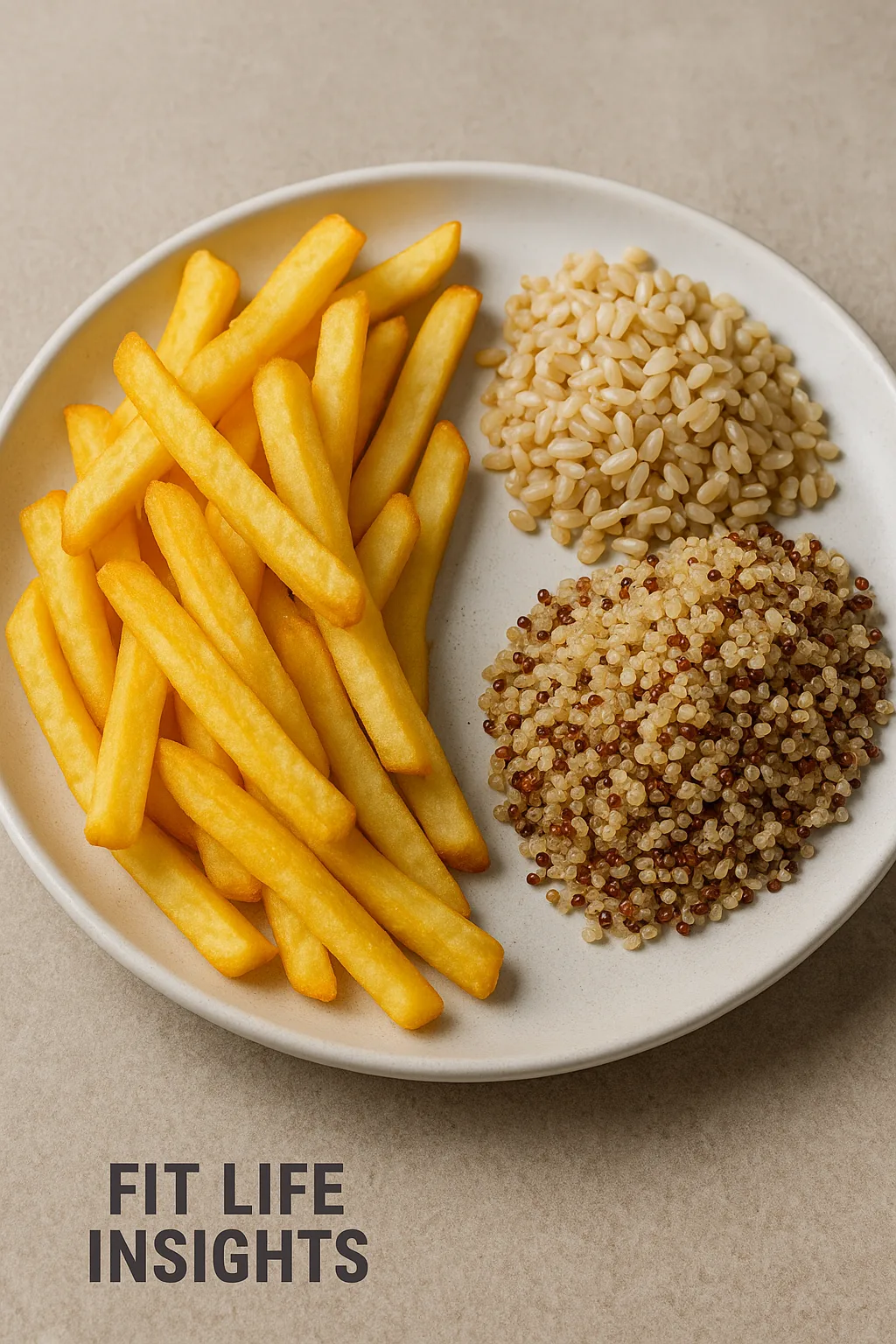
Evidence shows that replacing three weekly servings of French Fries with whole-grain alternatives corresponds to roughly a 19% reduction in type 2 diabetes risk. Put differently, small, consistent swaps deliver measurable metabolic benefits. Rather than demonising the potato, the emphasis is on how the carbohydrate is prepared and what it’s paired with. Whole grains, legumes, and fiber-rich vegetables slow glucose absorption, improve satiety, and reduce post-meal blood sugar spikes – all of which protect insulin sensitivity over time.
Concretely, choose foods with lower glycemic load and higher fibre and micronutrient density. When you replace a portion of deep-fried, ultra-processed French Fries with a serving of whole grains or legumes, you’re not only cutting calories and unhealthy fats – you’re adding fiber, B-vitamins, magnesium, and polyphenols that attenuate metabolic risk.
Moreover, pairing starchy foods with protein, healthy fats, and non-starchy vegetables further blunts glycaemic excursions and improves meal satisfaction.
Why Cooked Method Matters: Nutrition in Detail
Potatoes themselves are nutrient-rich packed with fiber, vitamin C, B6, potassium – especially when consumed with the skin. However, deep-frying them:
- Increases calorie density
- Adds unhealthy fats, including trans fats (especially from reused oil)
- Generates advanced glycation end products and acrylamides that raise inflammation and metabolic stress.
Practical Tips: Moderation, Smarter Cooking, Whole Foods
If you love French Fries, you don’t have to banish them forever – but moderation is crucial. Experts suggest:
- Limiting fries to no more than once every couple of weeks
- Opting for home-made versions using minimal oil (preferably heart-healthy oils) and baking or air-frying instead of deep-frying
- Boosting your diet with whole grains (like oats, quinoa, brown rice) and fiber-rich whole foods to support balanced blood sugar
Closing Thoughts
In summary, the evidence is clear: French Fries – when consumed frequently – are linked to a significantly elevated risk of developing type 2 diabetes. Crucially, this risk stems not from the potato itself, but from the frying process and ultra-processed nature of the food. By contrast, healthy cooking methods and smart carb swaps offer tangible protective benefits. Embracing whole grains and mindful preparation is a powerful and accessible strategy to support long-term metabolic health.
Key Takeaways
- Eating three weekly servings of French Fries may raise type 2 diabetes risk by 20%; it increases to 27% at five servings per week.
- Other preparations – boiled, baked, mashed potatoes – do not significantly elevate diabetes risk.
- Ultra-processing and frying make French Fries particularly harmful.
- Swapping fries for whole grains can cut risk by up to 19%.
- Potatoes can remain part of a healthy diet when prepared wisely – with skin on, minimal oil, and balanced with whole-foods.
Disclaimer: This blog post is for educational purposes only. It’s not a substitute for professional medical advice. Talk to a healthcare provider for personal guidance.
Sources: