

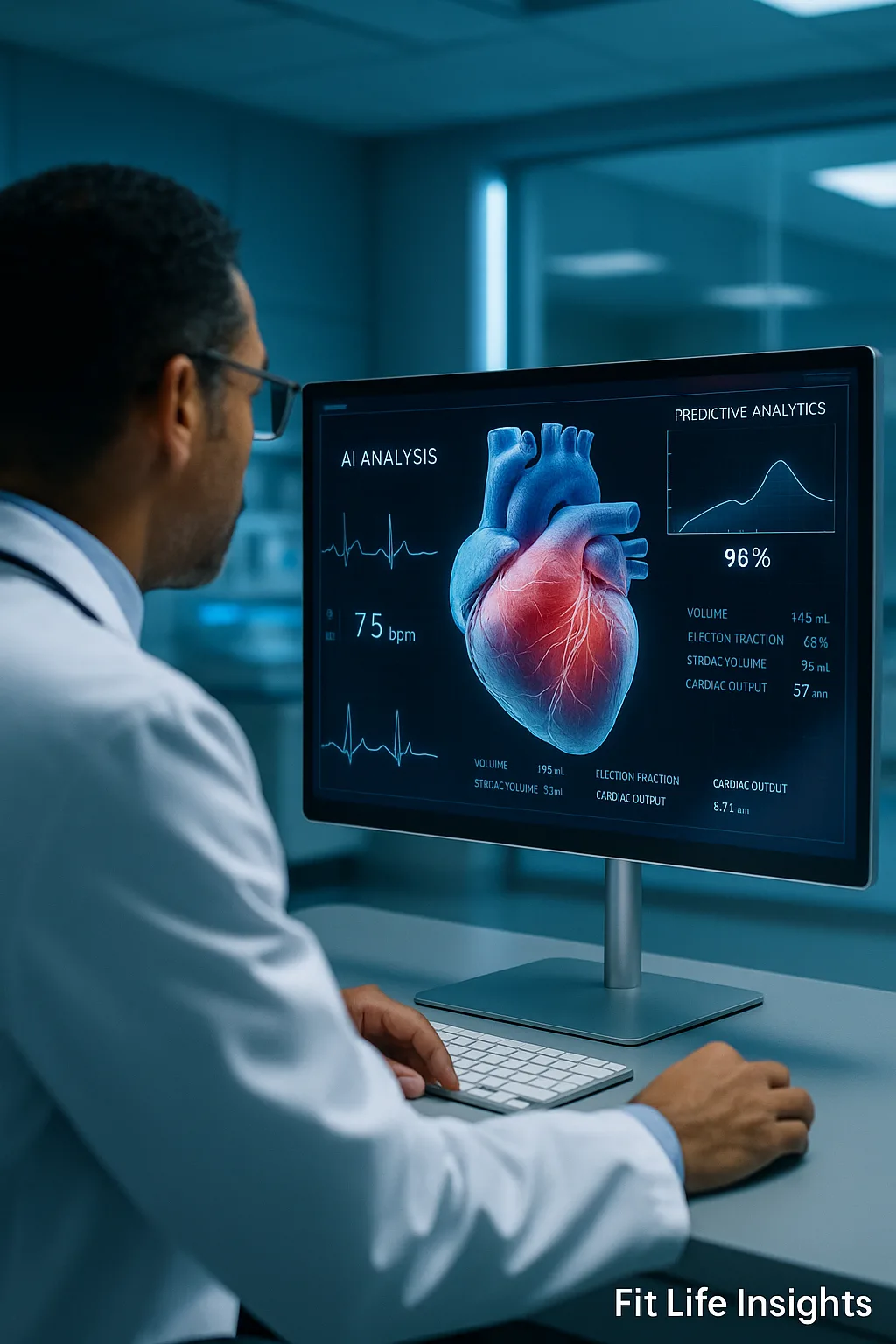
Introduction: AI Is Now a Heartbeat Ahead
Imagine a world where heart attacks are predicted before they happen. Where a simple ECG or echocardiogram, once limited by human interpretation, now becomes a precision screening tool. That world is no longer futuristic – it’s already here. Artificial Intelligence (AI) has carved out an extraordinary role in the realm of cardiovascular care, and in 2025, its impact is not just revolutionary, but life-saving.
From predicting sudden cardiac arrest to detecting early-stage heart failure, AI is drastically reshaping how doctors understand and diagnose heart conditions. With each passing month, new studies and innovations affirm that AI isn’t just a complementary tool – it’s quickly becoming a central figure in modern cardiology.
Read on to dive deep into the latest breakthrough, applications, and promise of artificial intelligence in detecting heart diseases.
How Artificial Intelligence Detects Heart Diseases: A 2025 Overview
In 2025, artificial intelligence in cardiology has moved beyond theory into clinical reality. AI algorithms now interpret vast datasets – from imaging to patient vitals – with astonishing accuracy and speed. These technologies use machine learning, deep neural networks, and real-time data analytics to identify signs of cardiovascular risk long before symptoms appear.
Recent research from the Cedars-Sinai Medical Center found that AI can predict the odds of sudden cardiac arrest with up to 74% accuracy – months in advance – by analyzing routine heart scans. Meanwhile, MIT researchers have transformed standard ECGs into powerful diagnostic tools, leveraging AI models that identify patients at risk of arrhythmia or heart failure with no visible abnormalities.
How does it work?
- Subtle waveform irregularities in ECG signals
- Pixel-based analysis of echocardiograms
- Pattern recognition in CT or MRI imaging
- Predictive modelling using patient history and lifestyle data
In essence, AI serves as an always-on, never-fatigued, error-resistant assistant, augmenting physicians’ capabilities in detecting heart diseases before they become catastrophic.
Game-Changing Tools and Apps Using Artificial Intelligence
With the surge of AI-based applications in healthcare, several standout tools are now helping both clinicians and patients stay a step ahead of heart disease.
One such innovation comes from the Heart Attack Foundation (HAF), which recently launched an AI-powered mobile app capable of predicting heart failure months before the onset of symptoms. This app analyzes ECG data and provides real-time risk assessments through machine learning algorithms.
Another breakthrough was detailed in JAMA, where researchers developed an AI system for echocardiograms. Unlike human technicians, this system delivered consistent results across multiple patent populations, reducing misinterpretation and improving diagnostic confidence.
Highlights of AI-powered cardiovascular tools:
- Predictive ECG analysis (by HAF)
- AI-enhanced echocardiogram interpretation (JAMA study)
- Sudden cardiac arrest prediction models (Cedars-Sinai)
- Risk stratification platforms using wearable devices
These applications are especially vital in low-resource or rural settings, where access to trained cardiologists is limited but smartphones and ECG machines are available.
Key Benefits of AI in Cardiology
The benefits of using artificial intelligence in detecting heart diseases are manifold. Not only does it promise better patient outcomes, but it also reduces healthcare costs, diagnostic delays, and emotional distress.
- Early Diagnosis
AI allows for proactive intervention, which is crucial in diseases like cardiomyopathy or atherosclerosis where early signs often go unnoticed.
- Increased Accuracy
Studies show AI interpretations are more consistent than human analysis, especially for complex datasets like echocardiograms or cardiac MRIs.
- Faster Results
Ai-driven platforms can generate diagnostic reports within seconds, accelerating treatment initiation.
- Remote Monitoring
With AI-backed wearables, doctors can monitor patients in real time, flagging high-risk changes before they escalate.
- Personalized Risk Prediction
AI can customize predictions based on a patient’s genetics, lifestyle, and comorbidities, offering precision medicine at scale.
Challenges and Ethical Considerations
While artificial intelligence in healthcare is undeniably promising, it comes with its own set of challenges and ethical dilemmas. Trust, privacy, and the need for regulatory frameworks remain key concerns.
- Data Privacy: With AI analyzing massive volumes of health data, ensuring data security is paramount.
- Bias in Algorithms: If trained on non-diverse datasets, AI tools may produce biased or inaccurate results.
- Lack of Explainability: Many AI models operate as “black boxes,” making it difficult for clinicians to interpret their decision-making logic.
Addressing these concerns
To make AI trustworthy and equitable in heart disease detection, we need:
- Transparent AI models with explainable outputs
- Diverse training datasets
- Strict data protection protocols
- Human-AI collaboration, not replacement
Future Outlook: The Next Frontier of AI in Cardiology
Looking ahead, the future of artificial intelligence in detecting heart diseases appears even more transformative. We can anticipate:
- AI-integrated stethoscopes that pick up murmurs missed by the human ear.
- Smartphone-based diagnostics using real-time voice, image, or pulse analysis.
- AI-powered population health tools that identify cardiovascular risk across entire communities.
Moreover, as wearable tech and 5G connectivity become ubiquitous, AI will be embedded into everyday life – alerting users to take action before a health event occurs.
Final Thoughts: A New Era of Cardiac Care Powered by Artificial Intelligence
As we stand at the intersection of technology and medicine, artificial intelligence is proving to be one of the most promising allies in the fight against heart disease. No longer confined to theoretical models, Ai is now actively transforming clinical practice – from detecting abnormalities invisible to the human eye to forecasting life-threatening cardiac events well in advance.
The power of AI lies not just in its computational abilities, but in its potential to democratize heart healthcare, especially in underserved areas. With AI-powered ECG apps and smart diagnostics becoming increasingly accessible, even basic health infrastructure can now deliver advanced cardiac insights.
In the coming years, collaboration between human expertise and machine precision will only deepen, making heart disease more predictable, preventable, and manageable than ever before.
Embracing this intelligent future means fewer missed diagnoses, more lives saved, and a seismic shift in how we approach heart health. As 2025 unfolds, the fusion of cardiology and artificial intelligence is no longer a luxury – it’s a necessity.
Key Takeaways
- Artificial Intelligence is transforming heart disease detection, making diagnostics faster, more accurate, and highly predictive.
- AI tools like echocardiogram interpreters, ECG-based apps, and predictive models are saving lives by detecting heart failure months in advance.
- Early diagnosis, remote monitoring, and personalized care are key benefits of AI in cardiology.
- Challenges remain – especially regarding data ethics, algorithm bias, and explainability – but ongoing advancements are addressing these.
- The future holds smart, AI-integrated healthcare ecosystems that continuously monitor and safeguard heart health.
Disclaimer: This blog is for informational purposes only and does not constitute medical advice. Always consult a qualified healthcare provider before making decisions related to heart health. While artificial intelligence enhances medical tools, it does not replace clinical judgment.
Sources:
- Mobi Health News – AI predicts cardiac arrest risk
- Sci Tech Daily – AI enhances ECG screening
- Medical Dialogues – AI interprets echocardiograms
- One India Health – AI-powered ECG app
[…] Artificial Intelligence is no longer a futuristic concept – it is already reshaping the way we diagnose, treat, and heal. AI in Healthcare has emerged as one of the most promising innovations of our time, bridging technology and medicine to accelerate recovery, reduce costs, and improve patient outcomes. From AI-powered diagnostics to revolutionary wound-healing devices, healthcare is entering an era of precision and personalization. […]